
Helping Swedish CHP plants qualify for frequency support services with low load desuperheating and steam conditioning
BVT Sweden has helped several combined heat and power (CHP) plants in Sweden prepare their steam systems for frequency support services. With the right desuperheating and steam conditioning solutions, these plants can start and stop electricity production within minutes, while keeping stable steam temperature even at very low loads.
The customers are combined heat and power and district heating plants in Sweden. In each plant, the application is the turbine bypass to the district heating condenser, where steam conditioning and desuperheating are needed. The challenge is to handle fast load changes while keeping stable temperature control at minimal steam flows. The solution is BVT Ranger, which combines the BVT-TB steam conditioning valve with dual cooling water injection.
A changing energy system
Sweden is a good example of how the energy system has transformed from steady baseload production to a more weather dependent production with less baseload. Hydroelectric plants have long worked as a quick and reliable balancer in the system to keep a steady 50 Hz frequency. Today the system requires higher flexibility, with even faster reaction times than hydroelectric plants can offer.
To support the stability of the electricity system, the Swedish transmission system operator Svenska kraftnät has introduced several frequency support services:
- FFR – Part of the remedial measures, activated during transient frequency drops to keep the power system within its operational safety limits. Full activation within 1.3 seconds at 49.7 Hz, 1.0 seconds at 49.6 Hz and 0.7 seconds at 49.5 Hz.
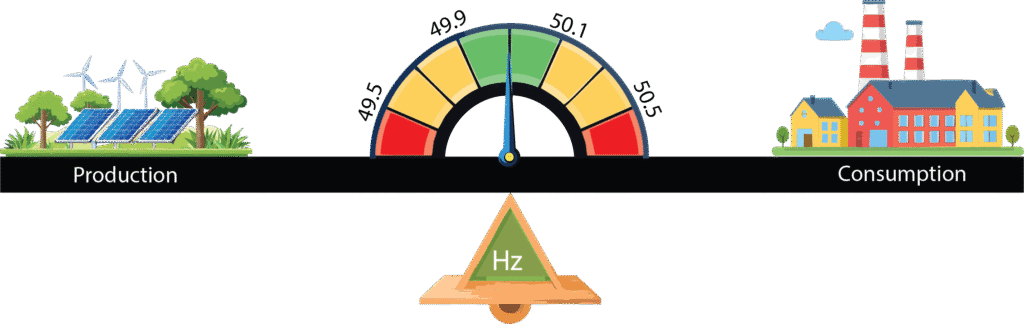
- FCR-N – Manages normal frequency variations. Automatic linear activation when the frequency deviates from 50 Hz, with full activation within 180 seconds at a deviation of +/- 0.1 Hz.
- FCR-D – Handles frequency deviations during disrupted operation. Automatic linear activation within 49.9–49.5 Hz for upregulation and 50.1–50.5 Hz for downregulation, with full activation within 30 seconds when the frequency falls below 49.9 Hz.
- aFRR – Relieves activated FCR-N and FCR-D. Automatic linear activation when the frequency deviates from 50 Hz, with full activation within 300 seconds (5 minutes).
- mFRR – Relieves the automatic support services and is mainly used to manage disturbances and overloads in the transmission network. Full activation within 15 minutes.
The challenge for CHP plants
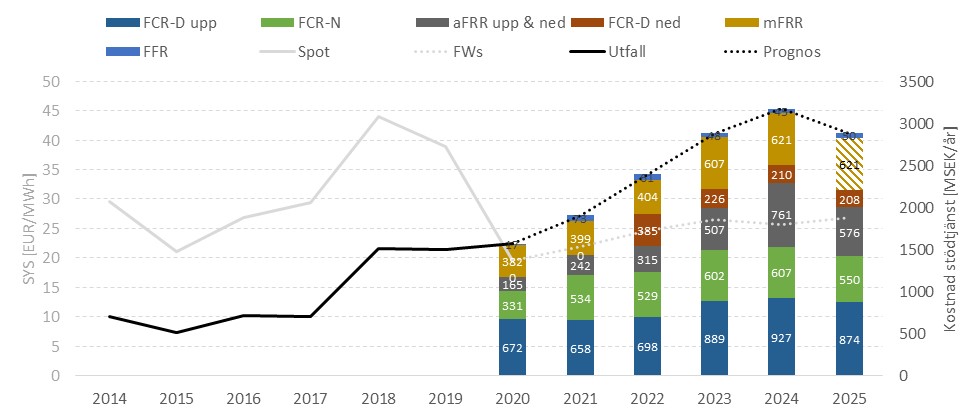
For a district heating plant that can produce electricity, frequency support services are a welcome contribution to the revenue. The market in Sweden is currently 3–3.5 billion SEK and is expected to grow. To qualify, electricity production must be able to start or stop within minutes. Since the energy medium is steam, every component in the steam system must handle this flexibility. The most critical component is the turbine bypass valve, often installed in parallel with the steam turbine and feeding the district heating condenser. When the turbine is quickly unloaded, the bypass must take over and the desuperheater must keep the temperature stable from very small flows up to full load.
The solution
BVT Sweden has delivered desuperheater and steam conditioning solutions to several CHP plants, based on the BVT Ranger concept and the BVT-TB steam conditioning valve. Dual cooling water injection combines spring-loaded spray nozzles with steam-assisted nozzles, which gives very high rangeability and accurate temperature control even at minimal steam flows.
The result
The plants can now meet the technical requirements for frequency support services, with fast load changes and stable steam temperature across the whole operating range. This gives additional revenue, more flexible operation and a contribution to a more stable electricity system.
Do you want your plant to take part in frequency support services, or do you have problems with temperature control at low loads? Read more about BVT Ranger and the BVT-TB steam conditioning valve.